Smoked Chicken Thighs: Easy & Juicy Recipe Guide
Did you know that chicken thighs contain roughly twice the fat content of chicken breast, and that’s exactly why they’re far more forgiving on the smoker?
While lean cuts can dry out quickly during long, low-temperature cooking, smoked chicken thighs practically self-baste as they cook, staying juicy even after hours of smoke exposure.
If you’ve ever been intimidated by smoking chicken for fear of ending up with something dry or rubbery, thighs are the perfect place to start. This guide walks through everything you need to make tender, smoky, fall-off-the-bone chicken thighs, from seasoning to smoker temperature to the exact moment to pull them off — no smoking experience required.
Table of Contents
Ingredients List
Here’s what you’ll need for flavorful, juicy smoked chicken thighs:
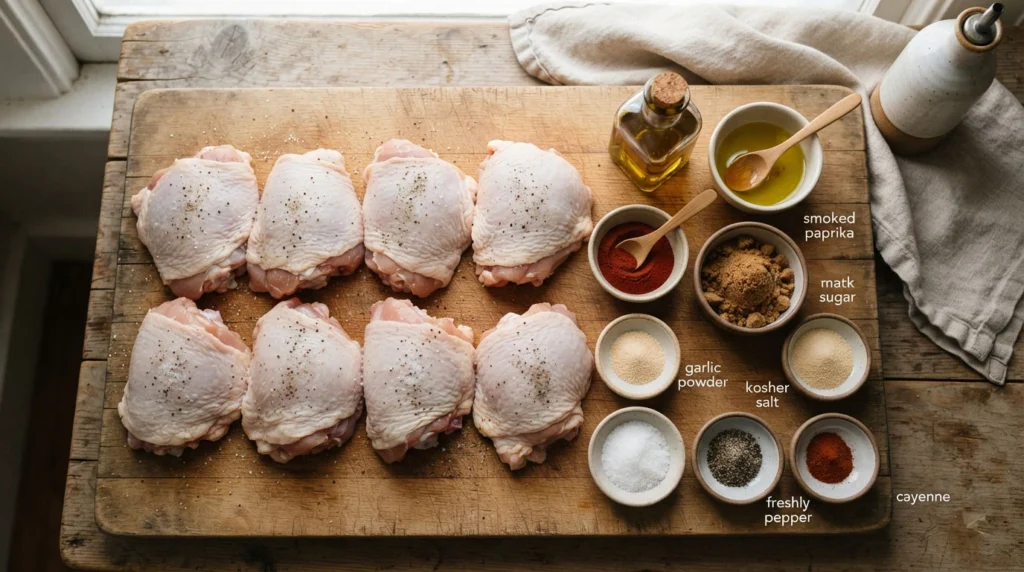
- 8 bone-in, skin-on chicken thighs — skin-on is strongly recommended, since it helps lock in moisture during the long smoke
- 2 tbsp olive oil – helps the rub adhere and promotes better bark formation
- 1 tbsp smoked paprika – reinforces the smoky flavor profile
- 1 tbsp brown sugar – balances the smoke and helps develop a light caramelized crust
- 1 tsp garlic powder
- 1 tsp onion powder
- 1 tsp kosher salt, adjusted to taste
- 1/2 tsp black pepper
- 1/2 tsp cayenne pepper, optional for a bit of heat
- Wood chips or chunks — hickory, apple, or cherry wood all pair beautifully with chicken
If you don’t have a dedicated dry rub blend, a simple combination of salt, pepper, and paprika works well too — the wood smoke itself carries much of the flavor.
Timing
- Prep time: 15 minutes
- Smoke time: 1.5 to 2 hours
- Total time: Approximately 2 hours to 2 hours 15 minutes
Smoking chicken thighs at 250°F takes roughly 30% longer than baking the same cut in a conventional oven, but the extended low-and-slow process is what builds the deep, smoky flavor and tender texture that oven baking simply can’t replicate.
Step-by-Step Instructions
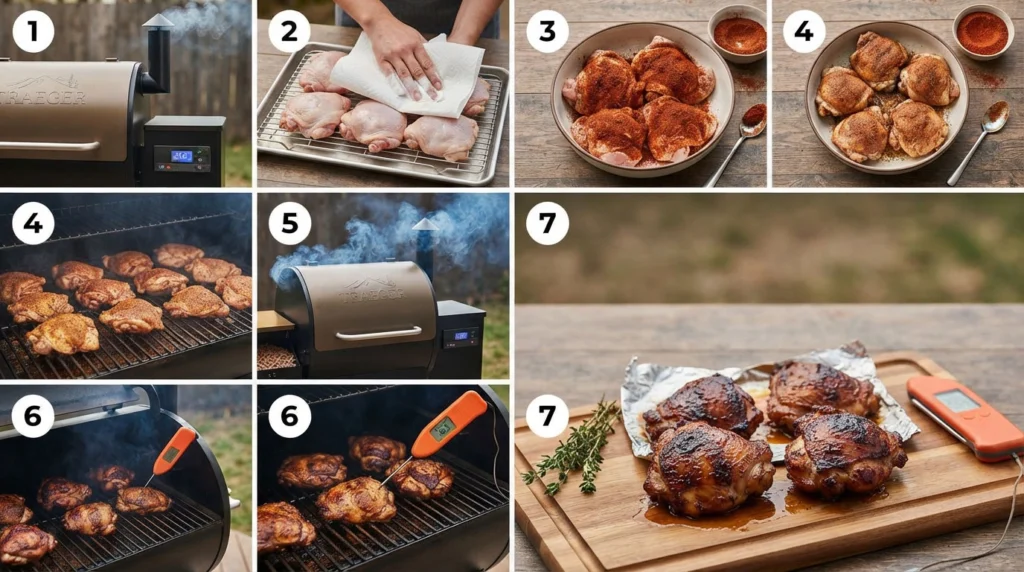
Step 1: Prep the Smoker
Preheat your smoker to 250°F (121°C) and add your wood chips or chunks according to your smoker’s instructions. Tip: a consistent temperature matters more than a high one here — resist the urge to run the smoker hotter to save time, since low and slow is what makes thighs so tender.
Step 2: Pat the Chicken Dry
Pat each chicken thigh dry with paper towels. Removing surface moisture helps the rub stick better and encourages a nicer bark to form on the skin.
Step 3: Mix and Apply the Rub
Combine the smoked paprika, brown sugar, garlic powder, onion powder, salt, pepper, and cayenne (if using) in a small bowl. Rub the chicken thighs with olive oil, then coat evenly with the seasoning blend, pressing gently so it adheres to the skin.
Step 4: Arrange on the Smoker
Place the chicken thighs directly on the smoker grates, skin-side up, leaving space between each piece for smoke to circulate evenly around all sides.
Step 5: Smoke Until Tender
Smoke the chicken thighs for 1.5 to 2 hours, maintaining a steady 250°F throughout. Avoid opening the lid too frequently, since each check can let out heat and smoke, extending the overall cook time.
Step 6: Check Internal Temperature
Insert an instant-read thermometer into the thickest part of the thigh, avoiding the bone. Chicken thighs are safe at 165°F (74°C), but for the most tender, fall-off-the-bone texture, many pitmasters prefer pulling them closer to 175–185°F, since dark meat holds up well to the extra time.
Step 7: Rest Before Serving
Let the smoked chicken thighs rest for 5–10 minutes before serving. This resting period allows the juices to redistribute throughout the meat, ensuring every bite stays moist.
Nutritional Information
Approximate values per serving (1 chicken thigh):
| Nutrient | Amount |
|---|---|
| Calories | ~280 kcal |
| Protein | 22 g |
| Total Fat | 20 g |
| Carbohydrates | 2 g |
| Fiber | 0 g |
| Sodium | 410 mg |
Because chicken thighs naturally contain more fat than breast meat, they tend to stay moist through the long smoking process without needing extra oil or butter added during cooking.
Healthier Alternatives for the Smoked Chicken Thighs Recipe
- Remove the skin after smoking: This preserves moisture during the cook while allowing you to cut a portion of the fat right before eating.
- Reduce the brown sugar: Cut it in half or omit it entirely if you prefer a more savory bark without the caramelized sweetness.
- Lower the sodium: Use less added salt and lean more on smoked paprika, garlic powder, and black pepper for flavor.
- Add a vegetable side to the smoker: Foil-wrapped vegetables like corn or sweet potatoes can smoke alongside the chicken for a complete, balanced meal.
- Trim excess fat before smoking: Removing any large visible fat deposits before seasoning can reduce overall fat content while still keeping the meat juicy from the skin-on cooking method.
Serving Suggestions
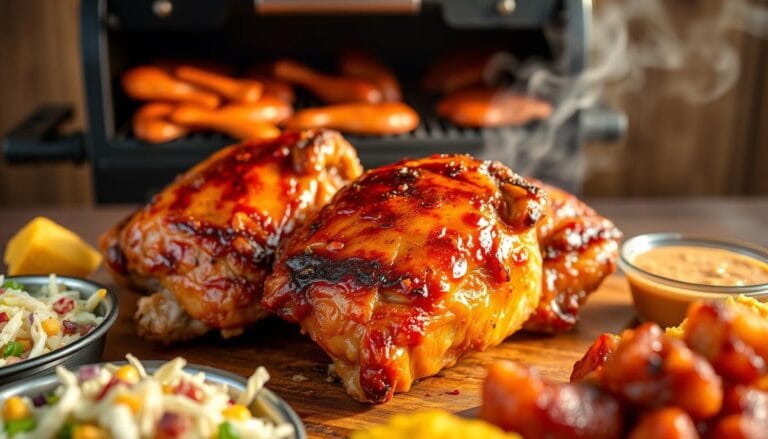
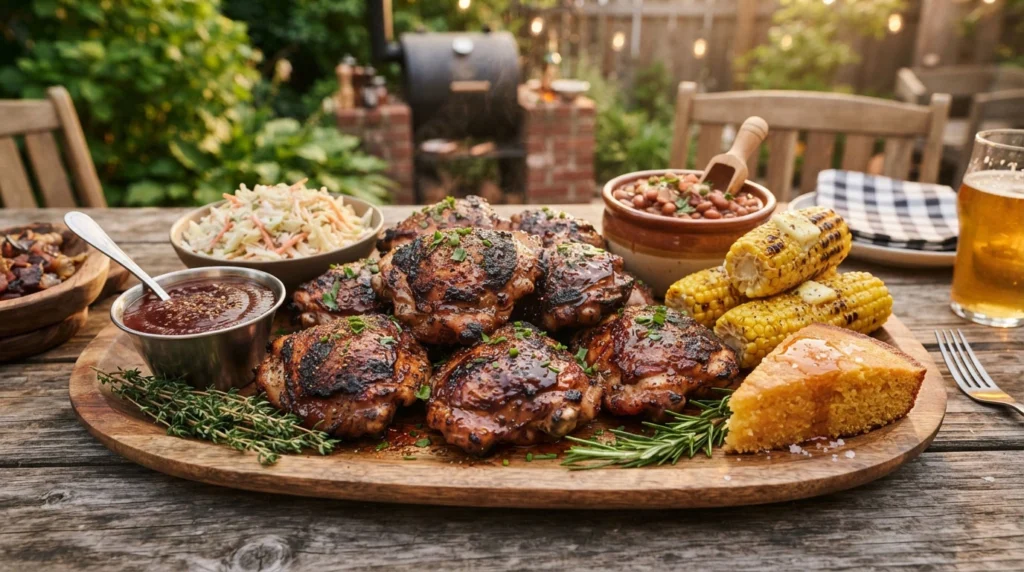
Smoked chicken thighs pair wonderfully with classic barbecue sides like coleslaw, baked beans, and cornbread. For a lighter meal, serve alongside a fresh green salad or grilled vegetables to balance the richness of the smoke. These thighs also work well shredded into tacos, piled onto sandwiches with barbecue sauce, or chopped into a smoky chicken salad for a creative way to use leftovers. Hosting a backyard gathering? Arrange the smoked thighs on a platter with a few dipping sauces — barbecue, ranch, and a spicy honey glaze all complement the smoky flavor beautifully.
Common Mistakes to Avoid
- Smoking at too high a temperature: Running the smoker hotter than 250°F to save time often results in a tough exterior before the inside catches up — low and slow is key for tender thighs.
- Skipping the skin: Removing the skin before smoking (rather than after) allows moisture to escape during the long cook, leading to drier meat.
- Opening the lid too often: Each peek lets out heat and smoke, which can add significant extra time to the overall cook.
- Not checking internal temperature: Visual cues alone can be misleading with smoked meat, since the surface often looks done well before the interior is fully cooked — always verify with a thermometer.
- Using too much wood smoke: Oversmoking can result in a bitter, overpowering flavor; a moderate, steady amount of smoke throughout the cook is more effective than a heavy burst at the start.
Storing Tips for the Smoked Chicken Thighs Recipe
Store leftover smoked chicken thighs in an airtight container in the refrigerator for up to 4 days. Reheat gently in a 300°F (150°C) oven or air fryer to help preserve the texture, since microwaving can make the skin rubbery and dry out the meat. These thighs also freeze well for up to 3 months — let them cool completely, wrap tightly, and freeze in a single layer before transferring to a freezer bag. Thaw overnight in the refrigerator before reheating for the best texture.
Conclusion
These smoked chicken thighs deliver deep, smoky flavor and consistently juicy meat, thanks to the forgiving fat content of dark meat and a low-and-slow cooking approach. With a simple rub and steady smoker temperature, this recipe is approachable even for smoking beginners. Give it a try this weekend, then share your results in the comments below or leave a review — and don’t forget to subscribe for more easy, flavorful recipes delivered straight to your inbox!
FAQs
How long to smoke chicken thighs at 250°F?
Chicken thighs typically take about 1½ to 2 hours at 250°F. Cooking time can vary depending on their size, whether they are bone-in, and how consistently your smoker maintains its temperature. Always check the internal temperature rather than relying only on the clock.
What temperature to smoke chicken thighs?
Chicken thighs are safe to eat when the thickest part reaches 165°F (74°C). For especially tender, fall-apart dark meat, many cooks prefer an internal temperature around 175–185°F, while avoiding the bone when checking with a thermometer.
Should I smoke chicken thighs at 225°F or 250°F?
Both temperatures work, but 250°F is a good balance between smoke flavor, cooking time, and tenderness. At 225°F, the thighs will generally take longer to cook, while 250°F gives you a slightly faster cook without losing the low-and-slow approach.
How do you keep smoked chicken thighs juicy?
Keep the smoker temperature steady, avoid opening the lid too often, and don’t overcook the chicken. Bone-in, skin-on thighs are naturally forgiving because their higher fat content helps them remain juicy during smoking.
Should I put oil on chicken thighs before smoking?
A small amount of olive oil can help the seasoning rub adhere to the chicken and encourage better browning. You don’t need a large amount because chicken thighs already contain plenty of natural fat.
Should chicken thighs be smoked skin-side up or down?
For this recipe, place the thighs skin-side up on the smoker grates. This allows the smoke and heat to circulate around the chicken while the skin develops a flavorful exterior.
What is the best wood for smoking chicken thighs?
Apple, cherry, and hickory are all good choices. Apple and cherry provide a milder, slightly sweet smoke, while hickory produces a stronger smoky flavor. For a balanced flavor, you can also combine a mild fruitwood with hickory.
Can you overcook smoked chicken thighs?
Yes. Although chicken thighs are more forgiving than chicken breast, they can still become dry if cooked excessively. Use an instant-read thermometer and remove them once they reach your preferred level of tenderness.
Do you need to rest smoked chicken thighs?
Yes. Let the chicken rest for 5–10 minutes after removing it from the smoker. This gives the juices time to redistribute and makes the meat more enjoyable when served.
Can I use boneless chicken thighs instead of bone-in thighs?
Yes, but boneless thighs generally cook faster than bone-in thighs. Start checking their internal temperature earlier and avoid relying on the 1½–2 hour timing used for the bone-in thighs in this recipe.
What should I serve with smoked chicken thighs?
Smoked chicken thighs pair well with coleslaw, baked beans, cornbread, grilled vegetables, corn, potato salad, or a fresh green salad. Barbecue sauce, ranch, and spicy honey glaze also work well as dipping options.
How should I store leftover smoked chicken thighs?
Store leftover chicken in an airtight container in the refrigerator for up to 4 days. You can also remove the meat from the bones and use it in tacos, sandwiches, salads, or wraps.
Have you tried one of our recipes? We’d love to hear what you think!
There are no reviews yet. Be the first one to write one.